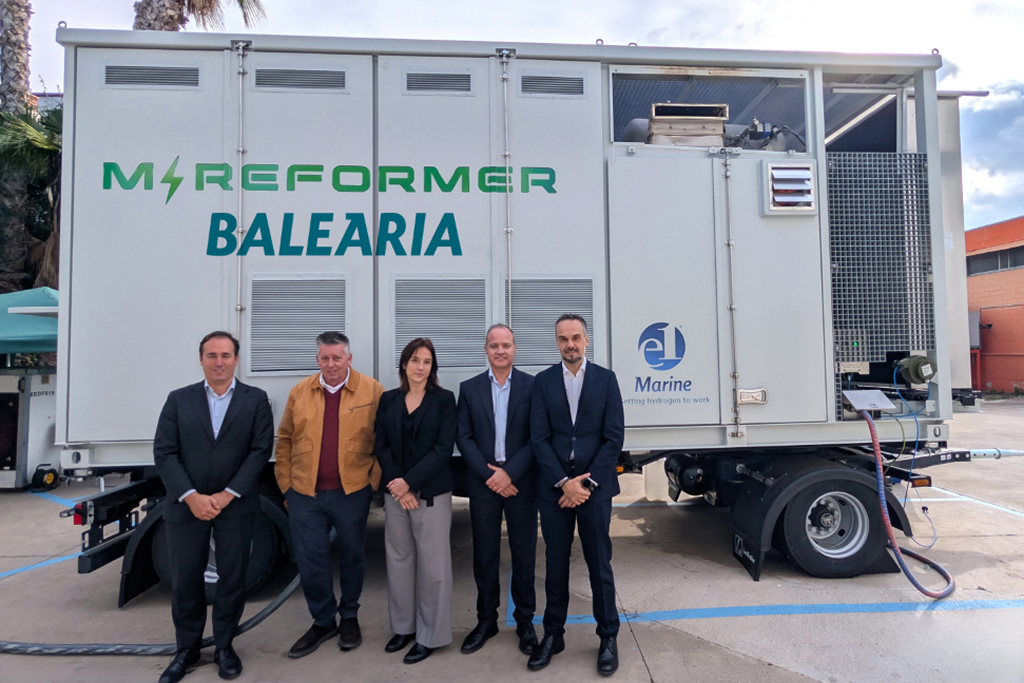
First Autonomous eMethanol Power Generation Container for Ferries in Europe
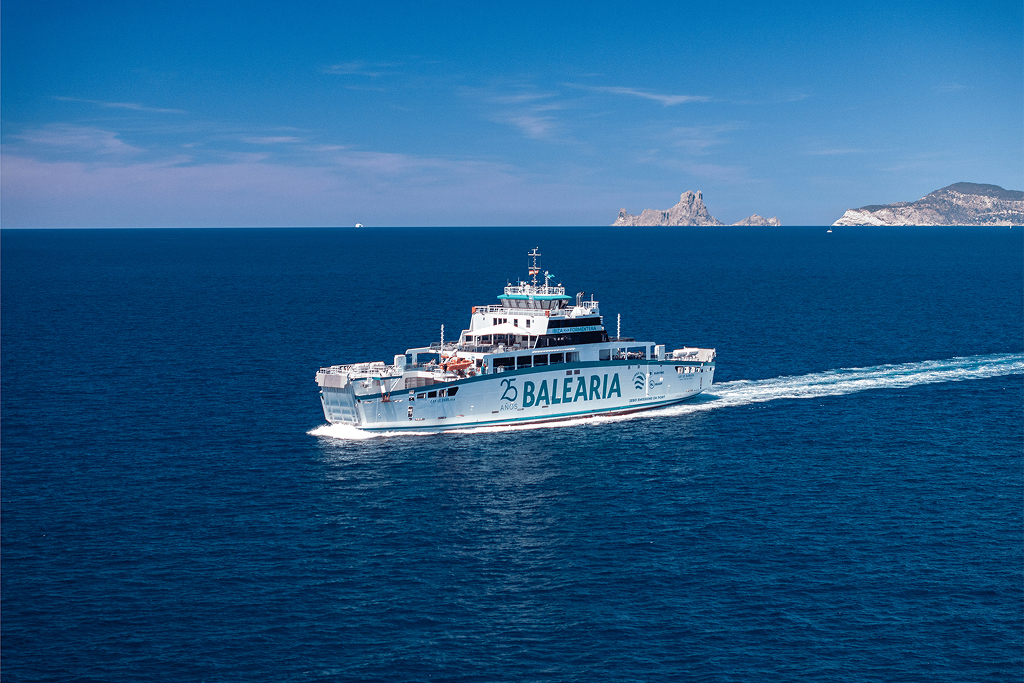
On-board hydrogen and electricity generation system deployed on Baleària’s electric ferry Cap de Barbaria, operating between Eivissa and Formentera.
Designed to validate hydrogen generation from e-methanol under real navigation conditions and accelerate maritime decarbonization.
PROJECT SUMMARY
Use:
- On-board auxiliary power
- Maritime energy systems
- Low-emission ferry operations
Client: Baleària
Vessel: Electric ferry Cap de Barbaria
Location: Eivissa — Formentera route, Spain
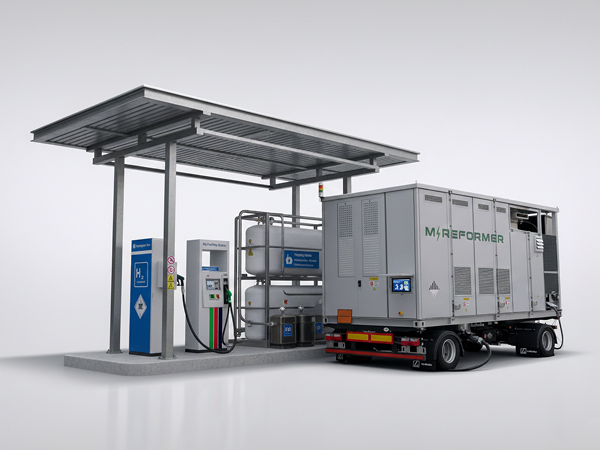
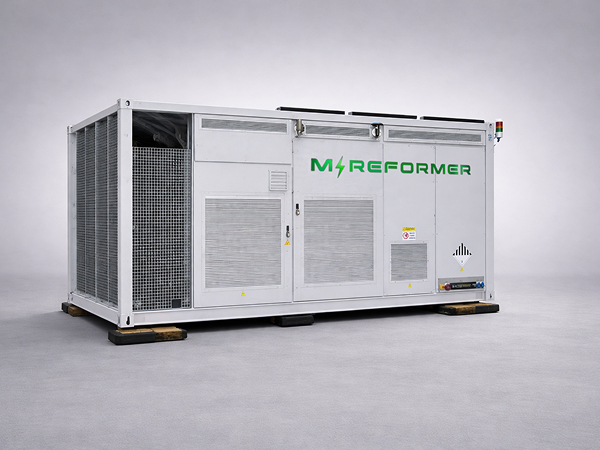
Solution: Autonomous containerized eMethanol power generation system (e-Nomad)
Technology: Methanol Reforming → Hydrogen → Fuel Cell → Electricity
Key equipment:
- L18 hydrogen generator (Element1® license)
- Fuel cell power system
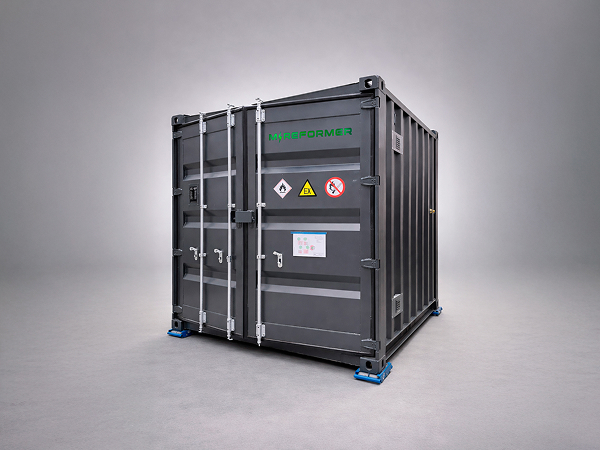
- Containerized autonomous architecture
Project status: Deployment & commissioning phase
Project Overview
Methanol Reformer delivered the first autonomous e-methanol power generation container for ferries in Europe, supporting Baleària’s strategy to advance low-emission maritime operations.
Installed onboard the electric ferry Cap de Barbaria, the system enables decentralized electricity generation using hydrogen produced from e-methanol. The vessel operates as a real-life testbed to validate hydrogen generation and fuel cell operation under real navigation conditions.
The project transforms the ferry into an operational laboratory to evaluate new energy technologies for short-distance maritime transport.
Project Objectives
- Validate onboard hydrogen generation from e-methanol
- Support electrification of maritime auxiliary systems
- Reduce emissions and fuel consumption
- Improve onboard energy efficiency
- Demonstrate containerized energy systems in maritime environments
Solution Deployed
The autonomous container integrates:
- e-Nomad power generation system
- L18 hydrogen generator
- Hydrogen purification system
- Fuel cell electricity generation
- Automated fuel conditioning and control systems
- Compact modular container architecture
The electricity generated supports auxiliary power onboard and complements battery charging, reducing reliance on conventional auxiliary generators.
Technical Validation
Prior to deployment, Baleària’s technical team conducted:
- Technical verification
- Factory Acceptance Test (FAT)
- Operational readiness assessment
These tests confirmed system performance and readiness for maritime commissioning.
Innovation & Impact
- First autonomous e-methanol maritime power container in Europe
- Real-world validation of renewable hydrogen onboard vessels
- Supports decarbonization of short-distance maritime transport
- Demonstrates e-methanol as a flexible hydrogen carrier
- Enables hybrid battery–hydrogen onboard energy architecture
Innovation & Impact
- Baleària — Ferry operator and project lead
- Methanol Reformer — System design & integration
- Element1® — L18 hydrogen generator technology
- E1 Marine — Maritime integration collaboration
- Cotenaval — Engineering & naval integration
“This initiative demonstrates how onboard hydrogen generation from e-methanol can transform maritime mobility, improving energy efficiency and accelerating the transition toward low-emission ferry operations.”
— Methanol Reformer & Baleària project teams